


.svg)
.gif)

To kick off the 2025 football season, Bud Light is not simply launching another celebrity-led beer campaign. It is using the NFL as a brand-repair platform. The campaign brings back Peyton Manning, limited-edition NFL team cans, QR-code promotions, and at-home tailgate giveaways. On the surface, the strategy looks familiar: football, humor, packaging, and fan rewards. But beneath that simplicity is a more important move. Bud Light is trying to rebuild cultural trust by returning to the occasions, rituals, and consumers that made the brand powerful in the first place.
For alcohol marketers, this campaign matters because it shows how a legacy brand can use a major cultural calendar moment not just for awareness, but for repositioning. The real lesson is not “use sports sponsorships” or “hire a celebrity.” It is that recovery marketing works best when every touchpoint reinforces the same emotional territory.
Why This Campaign Matters for Alcohol Brands
Bud Light’s NFL campaign is a useful case study because it addresses three problems many alcohol brands face at different stages of growth. First, it reconnects the brand with a specific drinking occasion: football watching. Second, it uses packaging as a media channel, not just a container. Third, it rebuilds trust through familiar brand codes instead of trying to invent an entirely new identity.
That matters because alcohol brands are rarely built through messaging alone. They are built through repeated presence in occasions consumers already care about: game day, tailgates, bars, backyard parties, festivals, restaurants, and nightlife. Bud Light’s campaign works strategically because it does not ask consumers to think too hard. It gives them a simple reminder: Bud Light belongs in football culture.
Parachuting into Fan Passion with Peyton Manning
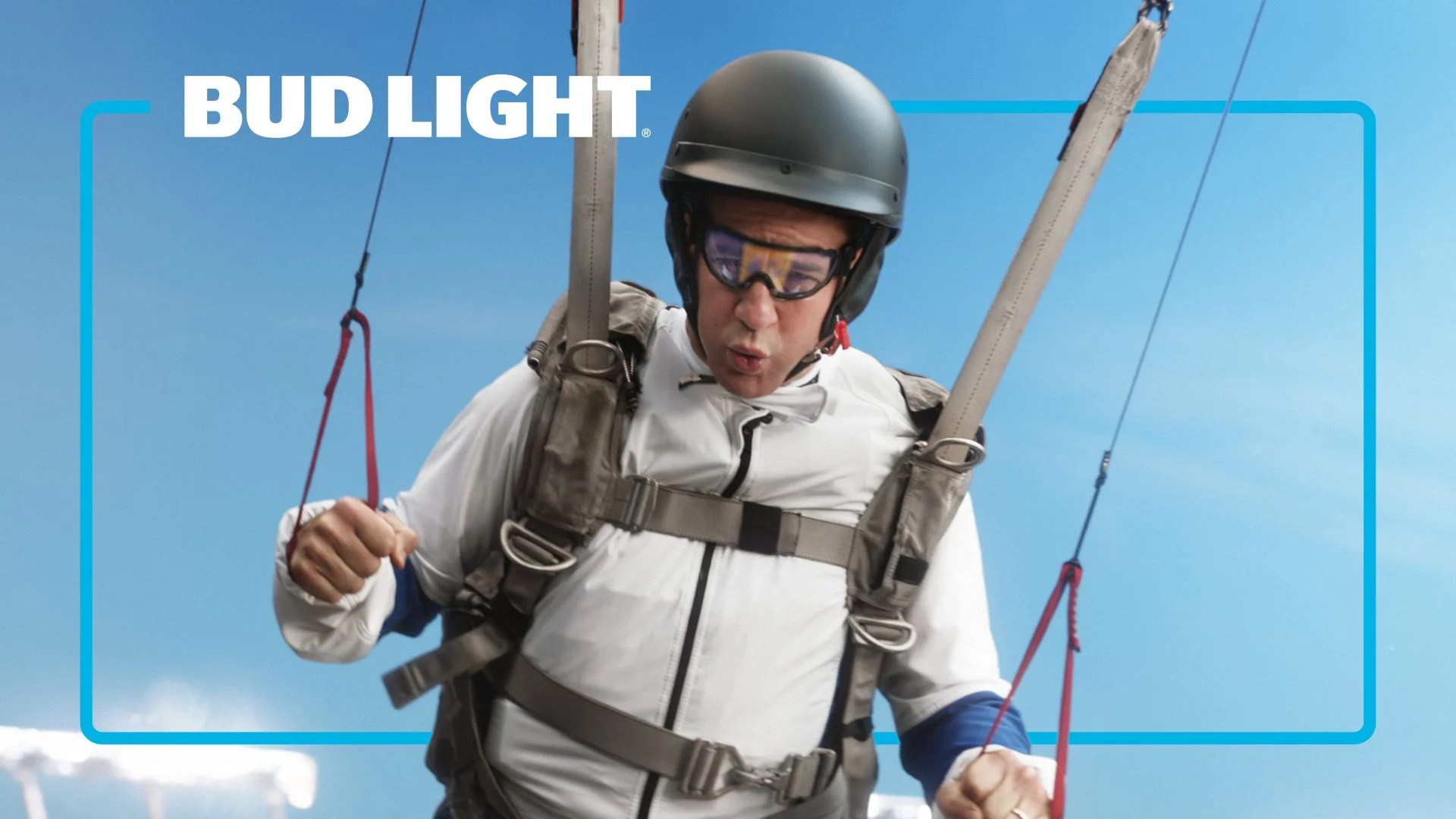
Bud Light’s new “Parachute” spot uses Peyton Manning in a familiar role: the likable football legend who can turn a beer ad into a joke fans understand immediately. The premise is intentionally simple. Manning skydives into a stadium, spots what appears to be an ice-cold Bud Light, calls his famous “Omaha!” audible, and changes direction mid-air. Instead of landing neatly on the field, he crashes into a Bud Light billboard.
The joke is broad, but that is part of the strategy. Bud Light is not trying to create a complex narrative. It is trying to re-establish emotional fluency with its core audience. Football fans know Manning. They know “Omaha.” They know the exaggeration of doing anything for your team - or your beer - on game day. That is why Manning is a safer and more effective choice than a trend-led influencer. His value is not only celebrity reach. It is cultural shorthand. He helps Bud Light communicate “football, humor, and familiarity” in seconds.
For alcohol marketers, the lesson is clear: ambassadors work best when they reduce friction. A strong spokesperson should make the brand easier to understand, not require an explanation.
Team Cans, QR Codes, and the Packaging-as-Media Strategy
Bud Light’s campaign does not stop with the TV spot. The brand is also bringing back limited-edition cans for 27 NFL teams, using team logos, colors, and retro-inspired striping to turn packaging into a fan object. This is more than seasonal design.
For beer brands, packaging is one of the few marketing assets that can appear at the exact moment of consumption. A team-branded can in someone’s hand during a game does something a billboard cannot: it connects the product directly to the ritual. Bud Light extends that role through QR codes, sweepstakes, ticket opportunities, merchandise drops, and at-home tailgate giveaways. The “Bring Home the Official Tailgate” promotion gives the campaign a physical behavior to own: watching football with friends, food, screens, and beer. This is where the campaign becomes more interesting from a marketing perspective. The team cans are not just collectible packaging. They are occasion anchors. They give fans a reason to choose Bud Light in the store before game day and a reason to share the product socially during the game.
For alcohol brands, this is an important distinction. Limited-edition packaging only works when it connects to a real consumer behavior. A new label alone is decoration. A package tied to a ritual can become a trigger for purchase.
.png)
Back to Basics: Why Bud Light Is Rebuilding Around Core Fans
For Bud Light, the 2025 NFL campaign is not just a seasonal media buy. It is part of a broader effort to stabilize the brand after a difficult period. The brand’s 2023 backlash created a major commercial reset. Bud Light lost cultural momentum, faced consumer resistance, and gave competitors more room to grow. By mid-2023, Modelo Especial had overtaken Bud Light as America’s top-selling beer by sales, ending a long period of category leadership. That context matters because the 2025 NFL campaign is not trying to be disruptive. It is trying to be recognizable.
Bud Light is returning to the brand codes that historically worked for it: sports, humor, easygoing social occasions, and mass-market friendliness. The campaign does not appear designed to provoke debate or chase cultural novelty. It is designed to make the brand feel familiar again. That is a strategic choice. When a brand has lost trust with part of its base, novelty can be risky. Consumers may not want reinvention. They may want reassurance. Bud Light’s current playbook suggests the brand understands that recovery requires consistency before experimentation.
For alcohol marketers, this is one of the most important lessons in the campaign. A brand reset does not always mean a new identity. Sometimes it means returning to the identity consumers already understood — and executing it with more discipline.
The Real Strategy: Reclaiming an Occasion
The strongest part of Bud Light’s campaign is not Peyton Manning, the cans, or the giveaway mechanics individually. It is the way all of those pieces point back to one occasion: football. This is where many alcohol campaigns fall short. They build awareness but do not clearly own a consumption moment. Bud Light’s campaign avoids that mistake. The ad dramatizes game-day devotion. The cans connect to team identity. The tailgate promotion supports at-home hosting. The athlete partnerships extend the association across the season. Together, those elements create a simple strategic message: when football is on, Bud Light should be there.
That kind of occasion ownership is especially important in beer, where functional product differences are often less important than habit, availability, and social context. Consumers may not actively compare beer brands every time they shop. They often buy what feels right for the moment. Bud Light is trying to make itself feel right for football again.
All-Star Endorsements and Year-Round Engagement
Beyond just one commercial, Bud Light’s broader strategy involves high-profile partnerships and year-round engagements to keep the brand entwined with football culture. Peyton Manning’s starring role in “Parachute” is the marquee example, but Bud Light isn’t stopping at retired legends. As the NFL season progresses, the brand will roll out additional content featuring current NFL players like George Kittle (San Francisco 49ers tight end) and Baker Mayfield (Tampa Bay Buccaneers quarterback). By tapping popular active players - especially those known for big personalities - Bud Light can connect with younger fans and team loyalists in a more contemporary way.
The brand is also exploring innovative content formats to engage fans outside traditional advertising. This summer, Bud Light teamed up with Netflix and Manning’s Omaha Productions to release a short-form parody sketch called “Armchair Quarterback,” tied to the streaming platform’s Quarterback docuseries. The sketch featured Manning in a lighthearted bit of content that blurred the line between marketing and entertainment. Such experiments indicate how Bud Light is diversifying its marketing playbook to include digital and social media content that resonates with modern audiences (who increasingly split their attention between TV, streaming, and online platforms). “The NFL season is always on for us,” Allen told industry outlet Marketing Brew, noting that Bud Light maintains a presence at NFL-related events year-round. From sponsoring the NFL Draft and even a offseason Tight End training camp, to planning campaigns for college football Saturdays, Bud Light is ensuring its brand stays visible wherever football fans turn. This 360-degree approach - combining TV commercials, on-pack promotions, experiential marketing, and social content collaborations - exemplifies a comprehensive push to rebuild Bud Light’s relationship with consumers on all fronts.
Insights and Takeaways for Alcohol Marketing Leaders
Bud Light’s NFL campaign offers several practical lessons for alcohol brands, especially those trying to rebuild relevance, defend share, or reconnect with a core audience.
Own a Specific Drinking Occasion
The campaign is strongest because it is not generic. It is built around football consumption: stadiums, tailgates, watch parties, team loyalty, and weekend rituals. Alcohol brands should be careful about trying to own broad lifestyle ideas too early. “Fun,” “premium,” “social,” or “refreshing” are not enough on their own. Stronger brands attach those ideas to specific moments where purchase decisions actually happen.
Use Packaging as a Behavioral Trigger
Bud Light’s NFL cans work because they give consumers a reason to choose the product before the occasion begins. The package is not only decorative; it signals participation in game day. For beer, RTD, and spirits brands, limited-edition packaging should answer one question: what behavior does this create? If it does not drive purchase, sharing, collecting, gifting, or occasion relevance, it is unlikely to matter beyond visual novelty.
Choose Ambassadors Who Clarify the Brand
Peyton Manning works because he reinforces Bud Light’s intended territory: football, humor, familiarity, and mainstream appeal. The lesson is not that every alcohol brand needs a celebrity. The lesson is that every ambassador should make the brand easier to understand. If a partnership requires too much explanation, it may create attention without strengthening positioning.
Rebuild Trust Through Consistency
Bud Light’s campaign is not trying to solve every brand challenge at once. It focuses on familiar codes and repeats them across TV, packaging, promotions, digital content, and live football culture. For brands recovering from consumer confusion or market pressure, consistency is often more valuable than surprise. Before asking consumers to believe something new, the brand has to prove it still understands what made people choose it in the first place.
Connect Media to Real-World Consumption
The strongest alcohol campaigns do not live only in ads. They show up where the product is bought, served, shared, and consumed. Bud Light’s campaign connects media attention with retail packaging and at-home football rituals. That bridge matters. A campaign may generate awareness, but if it does not connect to a real purchase or consumption moment, the commercial impact is limited.
Looking Ahead
Bud Light’s NFL campaign is a confident return to familiar territory, but its success will depend on whether the brand can convert cultural visibility into sustained purchase behavior. The campaign has the right ingredients: a recognizable football figure, strong occasion alignment, retail visibility, fan rewards, and a message that is easy to understand. More importantly, those pieces work together instead of feeling like separate tactics.
For alcohol marketers, the campaign is a reminder that heritage brands do not always need to reinvent themselves to regain relevance. They need to understand which parts of their heritage still matter and rebuild around those with discipline. Bud Light is betting that football can once again serve as its strongest cultural platform. That bet makes sense. The larger question is whether repeated presence across the NFL season can turn familiarity back into loyalty.
Editorial Note: This article was developed by OhBEV as an alcohol marketing analysis based on publicly available campaign information, industry reporting, and OhBEV’s experience in brand positioning, campaign strategy, and alcohol marketing execution.
Sources and Further Reading
- Anheuser-Busch: Bud Light NFL 2025 campaign announcement
- Adweek: Peyton Manning returns for Bud Light’s NFL season kickoff
.svg)


%20(1).png)

.jpeg)
