


.svg)

.gif)

Introduction
Sake, often referred to as nihonshu in Japan, is a traditional rice-based alcoholic beverage with centuries of cultural heritage. Despite its deep roots and ceremonial significance in Japan, the sake industry finds itself at a crossroads in the mid-2020s. On one hand, domestic consumption in Japan has been on a long-term decline due to an aging population and shifting preferences, threatening the survival of small breweries. On the other hand, global interest in sake is surging, turning this once-insular beverage into an internationally appreciated drink. Exports of Japanese sake have reached record highs in recent years, and sake is increasingly found on menus far beyond Japanese restaurants. In December 2024, UNESCO’s recognition of traditional sake brewing as an Intangible Cultural Heritage underscored the drink’s cultural value and gave producers hope for renewed enthusiasm at home and abroad. This article provides a comprehensive forecast and trend analysis of the sake market through 2026, examining its global market size, regional developments, evolving consumer trends, production innovations (including AI and sustainability efforts), trade and educational initiatives, key challenges, and strategic outlook for the future.
In crafting this analysis, we take a people-first approach: looking at the sake market from an expert perspective, citing up-to-date data and real industry developments. The goal is to offer actionable insights and a thorough understanding of where the sake industry stands in 2026 and where it’s headed.
Global Snapshot: Key Indicators and Market Size
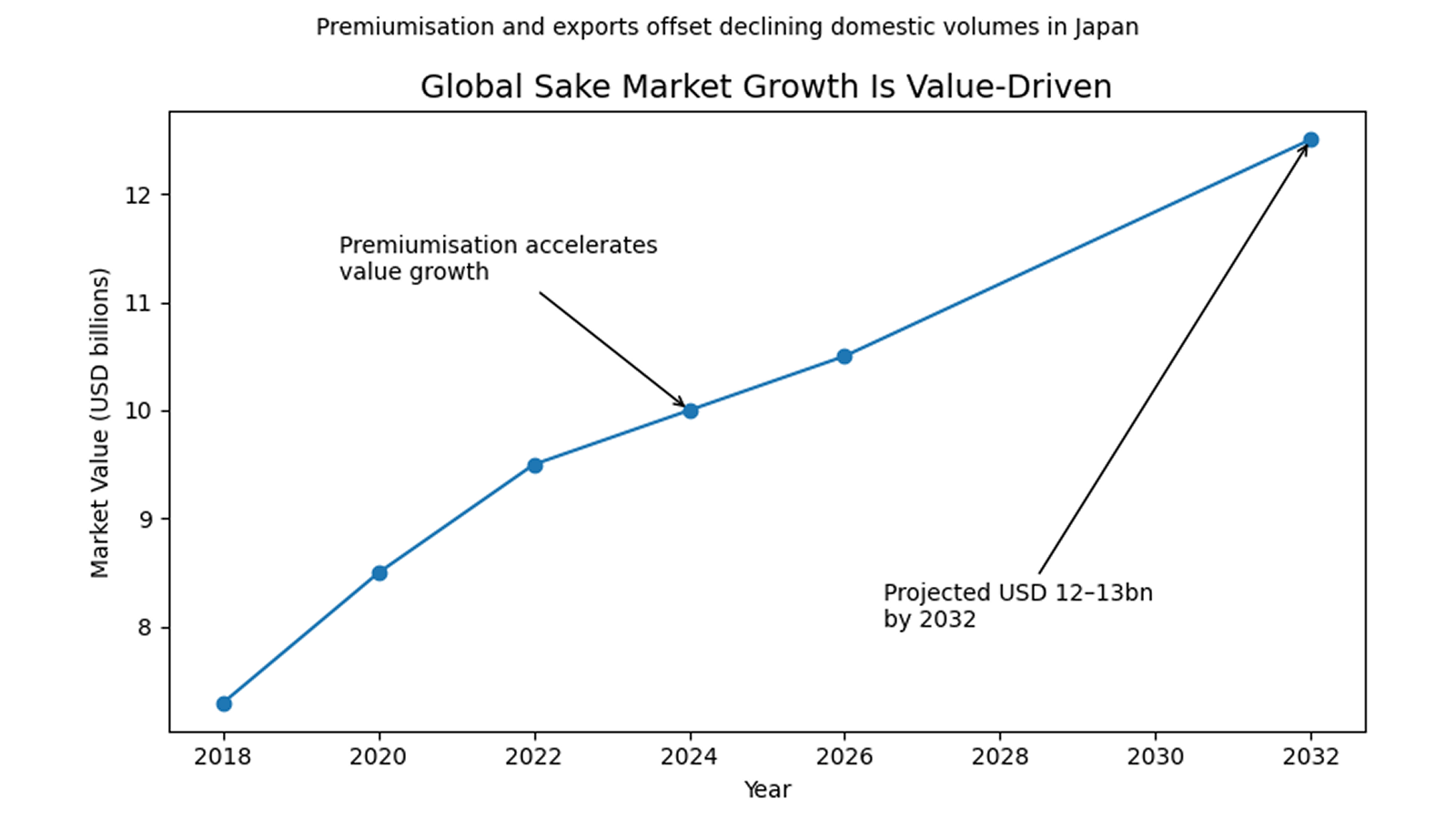
The global sake market has been experiencing steady growth, even as volume consumption faces headwinds from Japan’s domestic decline. In value terms, the market expanded from an estimated USD 7.3 billion in 2018 to roughly USD 10-11 billion by the mid-2020s, and it is projected to reach around USD 10.5 billion by 2026. This represents a moderate compounded annual growth rate (CAGR) in the mid-single digits (around 4-5% per year). Some forecasts extend further, suggesting the global sake market could grow to $12-13 billion by 2032 if current trends continue. Notably, much of the value growth is driven by premiumization and export demand rather than sheer volume expansion - in fact, global volume is nearly flat or even declining slightly due to lower consumption in Japan’s aging population. In other words, people worldwide are spending more on sake even as the total liters consumed rise slowly, indicating a shift toward higher-priced premium sakes.
A key indicator of sake’s globalization is the export boom of the last decade. Japanese government data shows that 2022 marked the 13th consecutive year of record-high sake exports, with 47.5 billion JPY worth of sake (about $350 million) shipped abroad in that year. Export volume hit 35.9 million liters in 2022, roughly 10% of Japan’s total sake production by value. For perspective, back in 2013 the export value was only around one-fifth of that, meaning the overseas market for sake has exploded by over 450% in value from 2013 to 2022. Even with a slight pullback in 2023 (exports dipped a few percent from the peak, reflecting market adjustments post-pandemic), international demand remains on a strong upward trajectory.
This global snapshot highlights a dual reality: Japan remains the largest producer and consumer of sake, but its domestic market is shrinking, while overseas markets - North America, Europe, and Asia-Pacific (outside Japan) - are fueling growth. Sake’s profile is rising internationally due to factors like the popularity of Japanese cuisine worldwide, an interest in unique craft beverages, and strategic branding efforts by breweries. The stage is set for sake to solidify its place in the global alcoholic beverage landscape alongside wine and spirits, albeit as a niche-but-growing category. Next, we delve into regional market highlights to see how sake is performing in different parts of the world.
Regional Market Highlights
North America
North America has emerged as one of the most dynamic growth regions for sake outside Japan. In the United States in particular, sake is shedding its image as a specialty drink confined to sushi restaurants and becoming a trendy alternative in the broader alcoholic beverage scene. Off-premise sake sales in the U.S. (e.g. retail stores) have grown consistently in recent years - by some estimates over 22% in the last four years in dollar terms - reflecting increased consumer uptake. Several factors underpin this growth. One is the proliferation of Japanese cuisine: the U.S. now boasts over 30,000 Japanese restaurants, and many non-Japanese eateries are also incorporating sake into their beverage programs. Pairing sake with foods like cheeses, seafood, and even steaks has become a talking point for sommeliers and chefs, introducing sake to new audiences.
Additionally, a craft sake movement is taking hold: the U.S. is now home to around 30 sake breweries, more than any country outside Japan. These range from Japanese expatriate-led ventures to former American craft brewers who have shifted to rice fermentation. For example, Brooklyn Kura in New York and Sequoia Sake in San Francisco are producing fresh, unpasteurized nama sakes locally, giving American consumers a taste of sake styles that traditionally had to be imported.
Interestingly, American-made sakes are even being exported back to Japan in small quantities, an almost ironic turn that shows how far the craft has spread. The presence of local breweries has helped with sake education and availability: consumers can attend brewery taprooms and sake tastings, demystifying a beverage that once suffered from a perception of being exotic or daunting. Major distributors and retailers in the U.S. have also expanded their sake portfolios, often dedicating shelf space to a variety of brands and grades (from inexpensive futsu-shu to premium junmai daiginjo). The result is that the U.S. market for sake was valued around $500 million in the late 2010s and is projected to triple by the early 2030s (to about $1.5 billion by 2032). If that projection holds, it would make North America one of the largest sake-consuming regions outside Asia.
Canada is likewise seeing greater sake awareness, albeit on a smaller scale. Cities like Vancouver and Toronto have vibrant Asian dining scenes where sake is increasingly popular. North America’s sake trends also include a push towards sake-based cocktails and innovations. Mixologists are using sake in cocktails for its umami and subtle sweetness (for instance, in sake martinis or mixers with yuzu and other Asian flavors). This “east-meets-west” mixology trend further ingrains sake into local bar culture. The key challenge in North America remains consumer education - overcoming the misconception that sake is only meant to be served hot or that it’s all high-alcohol “rice wine.” However, ongoing educational initiatives (discussed later) and the inherently curious nature of younger drinkers mean that the U.S. and its neighbors are likely to continue as growth markets. By 2026, North America is expected to account for a significant share of sake’s global growth, driven by both imports from Japan and the success of North American craft sake breweries.
Europe
Europe represents a smaller but steadily expanding market for sake. Traditionally, European interest in sake lagged behind North America, but that is changing as gastronomic appreciation for sake grows. In 2022, Japanese sake exports to Europe reached approximately ¥2.55 billion (around $18-20 million) in value, up 25% from the prior year. While Europe’s share of global sake consumption remains modest (roughly 5% of Japan’s export value by 2022), it is noteworthy that Europe’s imports have more than doubled over the past decade. Countries such as the United Kingdom, France, and Germany are leading the European sake renaissance. The UK has been particularly enthusiastic: London now hosts multiple sake-focused bars and even its own local sake breweries (e.g. Kanpai London Craft Sake, founded 2017). The presence of a domestic brewery in the UK - and others in Norway, Spain, and France - indicates that interest has reached the point where entrepreneurs see a market for locally brewed sake in Europe. These European craft sakes often cater to local palates and sustainable practices, but they also serve an educational purpose by making fresh, unpasteurized sake accessible without transcontinental shipping.
In high-end dining circles, sake has earned a place alongside wine as a pairing for fine cuisine. Top Michelin-starred restaurants in Paris, London, and Copenhagen now feature premium sakes on their beverage lists, sometimes with dedicated sake sommeliers guiding diners. European sommeliers praise sake for its versatility, noting how sparkling sake makes an excellent aperitif and how junmai styles with rich umami can pair with cheeses or game in ways traditional wines might not. This culinary integration is helping change perceptions in Europe: rather than seeing sake as a novelty, more consumers are beginning to appreciate it as a sophisticated, food-friendly drink.
However, challenges remain in Europe. Sake is still not a mainstream beverage for the average European consumer. It’s mostly urban foodies and wine enthusiasts driving the interest. Price is another factor - imported premium sake can be expensive in Europe due to shipping costs and smaller distribution networks. The good news is that a free trade agreement between Japan and the EU in recent years eliminated tariffs on Japanese sake, making it more competitively priced in the EU market. Additionally, promotional events like Wine Paris & Vinexpo Paris and ProWein in Germany have featured Japanese sake pavilions, raising trade awareness. By 2026, Europe’s sake market is expected to continue its gradual climb. Industry forecasts see Europe’s sake consumption growing in the high single digits annually as awareness spreads. The establishment of educational programs (WSET even launched a Level 3 Award in Sake in London a few years ago) is creating a small but passionate community of certified “sake educators” and sommeliers across Europe. This suggests that Europe, while starting from a low base, could become an important long-term market, especially for higher-end sakes that align with Europe’s wine culture.
Asia
Asia is a diverse region for the sake market - it includes Japan’s massive but declining home market, as well as rapidly growing new markets like China, South Korea, and Southeast Asia. We must consider Japan separately from the rest of Asia due to its unique dynamics.
Japan (Domestic Market)
Japan is by far the largest producer and historically consumer of sake, but domestic demand has been contracting for decades. In 2023, Japan’s sake production was about 304,574 kiloliters (304 million liters), continuing a long-term downward trend. Younger generations in Japan drink far less sake than their parents and grandparents did, opting more for beer, wine, or non-alcoholic beverages. The result is that many small breweries have closed or consolidated; fewer than 1,200 active sake breweries remain in Japan today, down from several thousand a century ago. This decline poses a serious threat to the continuity of sake-making skills and Japan’s beverage culture.
In response, Japanese breweries are adapting by innovating with new products and focusing on premium quality to spur interest. For instance, there’s a trend toward lower-alcohol sakes and sparkling sakes to appeal to health-conscious or younger drinkers. Breweries are also emphasizing the storytelling of their brand - highlighting local ingredients, centuries of heritage, and unique brewing techniques - to differentiate themselves in a shrinking market. The Japanese government and industry groups have actively encouraged breweries to look outward (exports) to compensate for domestic losses. As a result, even though domestic sake consumption is half of what it was a few decades ago, the industry’s value hasn’t fallen as sharply because export revenue and premiumization at home (selling smaller volumes of high-end sake) help bolster it. By 2026, the domestic Japanese market is expected to stabilize to some extent, with breweries increasingly reliant on urban, older, or premium-seeking customers at home while treating overseas consumers as a crucial new customer base.
China and East Asia
The fastest growth in sake demand within Asia is coming from China. In 2022, China became the #1 importer of Japanese sake by value, buying about ¥14.16 billion worth of sake - a 137.8% increase year-over-year. This staggering growth is attributed to Chinese millennials and affluent urbanites developing a taste for sake as a fashionable, premium beverage. In China, Japanese sake is often positioned as a high-end drink (sometimes enjoyed similarly to fine wine or whiskey), and the average price per liter of exported sake to China has been rising.
As of 2022, the export data showed the price per liter of sake exported has more than doubled compared to 10 years prior (from around ¥633 to ¥1,323), reflecting strong demand for premium grades. This means Chinese consumers are not just buying more sake, but they are buying better (higher priced) sake, such as junmai daiginjo and aged sakes. The appeal in China is partly due to sake’s image of craftsmanship and cultural cachet, and partly due to the weak yen in recent years making imports more affordable. Additionally, the proliferation of Japanese cuisine and sushi restaurants in Chinese cities has introduced sake to many diners. By 2026, China is expected to remain a top growth market, though the pace may moderate from the triple-digit surges of the early 2020s to a more sustainable growth rate.
South Korea is another noteworthy market. Long a producer and consumer of its own rice wines (makgeolli and others), South Korea has been importing more Japanese sake as well. In 2022, South Korea was the #4 export destination by value, with ¥2.52 billion in imports (a 167.9% jump from 2021). Korean consumers - especially younger ones - have taken to premium sake as an “alternative luxury” drink. The weak Japanese yen has made Japanese sake relatively cheap in Korea, boosting imports as consumers seek quality alcohol at reasonable prices. Reports in 2025-2026 indicate a surge in sake imports in South Korea as consumers view it as an affordable upscale option compared to expensive whiskeys or wines (which saw price hikes). This trend is reinforced by cultural exchange: increased travel between Japan and Korea has exposed more people to each other’s beverages. By 2026, Korean importers expect sake’s popularity to continue, with more bars in Seoul carrying specialized sake selections.
Southeast Asia and Other Asia
Southeast Asia, though starting from a small base, is one of the most exciting new frontiers for sake. Countries like Thailand, Vietnam, Malaysia, Singapore, and Indonesia have seen triple-digit growth rates in sake imports recently. For example, in 2022 Malaysia’s imports jumped 187% and Vietnam’s 236% (albeit to a modest few hundred million yen each). These spikes are driven by a combination of factors: booming tourism and interest in Japanese pop culture, a growing middle class with adventurous tastes, and proactive marketing by Japanese trade agencies.
Singapore, with its high-end dining scene, has become a regional hub for premium sake - some limited-edition sakes are allocated to Singapore’s collectors and luxury bars. Meanwhile, Taiwan and Hong Kong have been steady consumers of sake for years; Hong Kong was traditionally a big market (it was #3 by value in 2021), though its imports fluctuated with economic conditions and pandemic effects. By 2026, many in the industry expect Southeast Asia’s sake consumption to steadily rise, helped by the fact that Japanese restaurants abroad now number in the tens of thousands globally, and a significant portion of those are in Asia. The presence of Japanese expatriate communities and Japanese grocery retailers in these countries also supports sake availability.
In summary, Asia outside Japan is embracing sake, each market in its own way. China and Korea are notable for volume and growth, Southeast Asia for rapid expansion from a low base, and Japan for the pivot from a saturated home front to an export-driven mindset. All these regional stories tie into the larger narrative of how sake is being redefined in the 2020s - moving from a Japan-centric beverage to a global spirit of intrigue.
Consumer Trends and Perceptions
As sake reaches new consumers worldwide (and adapts to new generations at home), several key consumer trends and shifts in perception have become evident. The modern sake consumer in 2026 is very different from the stereotype of a decade or two ago. Below, we outline the most significant trends in how people are thinking about and consuming sake:
Premiumization and Connoisseurship
Today’s consumers are showing a clear preference for premium sake categories - such as junmai, ginjo, and daiginjo - that emphasize craftsmanship and flavor complexity. This mirrors a broader trend seen in wine and spirits, where people are willing to pay more for artisanal or high-quality products. In sake terms, this means growth in the polished rice grades and aged sakes. The storytelling around premium sake (the rice polishing ratio, the brewery’s history, the water source, etc.) adds perceived value for consumers who are treating sake tasting similar to wine tasting. For example, a limited-release junmai daiginjo with a regional rice variety and a famous tōji (master brewer) is something aficionados seek out.
This premiumization trend is evident in export data: even as volumes grow modestly, the average export price per liter has doubled over the past decade, indicating consumers are buying pricier bottles. For the consumer, a premium sake offers a unique flavor experience - floral aromas, fruity notes like melon or banana, and a smooth, umami-rich palate - that sets it apart from other drinks. Sake breweries are leaning into this by releasing more ultra-premium expressions and even collaborating with luxury brands (some breweries have partnered with designers for special edition bottles, akin to champagne marketing).
Fruitier, More Aromatic Flavor Profiles
A notable shift in newly popular sakes is an emphasis on fruit and freshness in flavor. Many consumers, especially those new to sake, are drawn to styles that have bright, aromatic profiles (often found in ginjo and daiginjo sake) as opposed to the old image of sake being neutral or solely dry. “When people think of sake, they used to imagine a dry, clean style served hot,” one industry observer notes, “but now vibrant ginjo aromas of apple, pear, and tropical fruit are catching attention.” Brewers have responded by using specific yeast strains (like the Kyokai 1801 or proprietary yeasts) that produce ester-driven fruity aromas. These sakes are often best enjoyed slightly chilled, which also aligns with modern serving preferences. The result is that the perception of sake’s flavor palette has broadened - consumers realize it’s not one-note; it can range from crisp and apple-like to creamy and banana-like or even spicy and earthy, depending on brewing method. This expansion of flavor perception is critical in winning over wine drinkers, for instance, who appreciate aromatic complexity.
Texture and New Formats (Sparkling, Nigori)
Beyond flavor, consumers are exploring different textures of sake. Nigori (cloudy, unfiltered sake) with its creamy, rustic texture has gained popularity among younger drinkers for its novelty and dessert-like appeal. On the other end, sparkling sake has become a breakout trend. Sparkling sakes - which can be naturally bottle-fermented like champagne or force-carbonated - appeal to consumers who enjoy bubbly drinks and lower alcohol options. In some markets, sparkling sake is marketed as a refreshing aperitif or an alternative to sparkling wine at celebrations. The interest is so significant that groups of breweries in Japan have formed consortia dedicated to developing the sparkling sake category, experimenting with methods from pét-nat style to Champagne method aging. By 2025, one such sparkling sake even won a Champion Sake award at the International Wine Challenge, signaling that quality is catching up with popularity. Consumers find the light fizz and slightly sweet, fruity profile of many sparkling sakes very approachable. Importantly, these new formats break the mold of what consumers thought sake could be, thus altering perceptions: sake can be bubbly and fun, not just a serious drink in small cups.
Lower Alcohol and “Sessionable” Sake
Another consumer-driven trend is the move toward lower alcohol content in sake. Historically, standard sake is around 15-17% ABV (alcohol by volume), with undiluted genshu reaching 18-20%. Recently, many breweries are releasing sakes in the 12-14% range, and even as low as 5-8% for some sparkling types. This is influenced by global health and wellness trends where consumers are moderating alcohol intake, as well as a preference for lighter, more “sessionable” drinks that can be enjoyed over a longer time or in larger volumes without as much intoxication. A Master Brewer in Kyoto pointed out a practical brewing reason too: as climate change leads to rice with lower starch (due to hotter growing seasons), brewing to a slightly lower alcohol helps maintain balance and flavor depth.
From a consumer standpoint, these lower-alcohol sakes are attractive to those who might find traditional sake a bit too strong. They allow sake to be positioned as a lunchtime drink or something you can sip like a light wine. It’s not uncommon now to see a 12% ABV junmai ginjo marketed as “light and smooth, perfect for casual enjoyment.” This trend overlaps with the broader global movement towards lower-ABV beverages (like session IPAs in beer or low-alcohol cocktails). By normalizing lighter sakes, producers are expanding their audience to include people who might have avoided sake for fear of its strength.
Broader Occasions and Pairings
Consumers are also changing when and how they drink sake. No longer reserved for sushi night or special occasions, sake is increasingly consumed like wine - with a variety of cuisines and at various occasions. Innovative pairings are a big part of this trend. Sake’s inherent umami and low acidity can make it a surprisingly versatile partner for foods like cheese, grilled meats, Chinese dim sum, or Italian pasta. There’s a growing body of “sake pairing dinners” in major cities where non-Japanese restaurants collaborate with sake sommeliers to showcase how well sake can match with local cuisines. These events educate consumers that sake is not limited to Japanese food. At the same time, the casualization of sake is happening - for instance, canned sakes and sake in keg format (for by-the-glass service) have popped up. Some bars offer sake flights, treating it similar to a craft beer tasting. The more that sake is seen in diverse settings - at cocktail bars, at wine shops, at food festivals - the more its perception shifts from exotic to an everyday option.
Health and Purity Perceptions
It’s worth noting a subtle trend in how sake is perceived in terms of health. Sake, being free of sulfites (unlike wine) and often touted as containing amino acids and peptides from fermentation, has gained a bit of a reputation as a “clean” drink. Some wellness-conscious consumers believe that sake gives less of a hangover or is more natural. While scientific evidence on this is anecdotal, breweries have not been shy to highlight that sake has no additives and is just “rice, water, yeast, and koji.” This dovetails with consumer desires for transparency and simplicity in what they consume. As a result, a small subset of consumers, especially those who might have allergies to gluten or sulfites, see sake as an attractive alternative. Sake is gluten-free (made from rice) and the premium grades have very little residual sugar, which appeals to carb-conscious drinkers. These perceptions, whether fully accurate or not, are part of sake’s growing mystique as a premium but pure beverage.
Overall, consumer trends point to sake’s image evolving from a one-dimensional drink to a multi-faceted category. The modern sake drinker might describe sake as elegant, aromatic, and artisanal - a far cry from older stereotypes of harsh “rice wine” served hot to mask flaws. Sake breweries and marketers are capitalizing on these trends by adjusting their offerings: more sparkling and flavored products for the entry-level market, more limited-edition premium bottles for connoisseurs, and fresh branding that often highlights the Japanese aesthetic and craftsmanship (to leverage authenticity, which resonates with consumers seeking “the real thing”). As we move forward, consumer education remains crucial - many people still don’t know the differences between types of sake or the proper way to enjoy them. But the trends above indicate that as knowledge spreads, appreciation deepens. By 2026, the sake market is not only larger but also smarter: consumers know what a daiginjo is, they might have a favorite brewery, and they see sake as an option in many drinking scenarios, not just with sushi. This bodes well for continued growth, provided the industry can keep nurturing these positive perceptions.
Production and Innovation: AI Integration and Sustainability Initiatives
To meet the evolving market and overcome traditional challenges, sake producers are innovating in how they brew and operate. Two major fronts of innovation are technology integration (including AI and automation) and sustainability initiatives. These might seem at odds with sake’s image of hand-crafted tradition, but in practice, many breweries are finding ways to embrace modern tools while preserving the artistry of sake brewing. Below, we explore how AI and tech are reshaping production, and what sustainability measures are being pursued in the sake industry by 2026.
Precision Brewing with AI and Data
Brewing sake is a complex art-science blend, with countless variables from rice quality to koji development to fermentation temperature. In recent years, larger breweries and even some nimble smaller ones have started leveraging Artificial Intelligence (AI) and machine learning to optimize these processes. For example, Yokogawa Electric Corporation, in partnership with a Kyoto sake research group, tested an AI-guided fermentation system that uses real-time sensor data to adjust fermentation temperatures. In a proof-of-concept, their AI created a temperature schedule that, when implemented by brewers, shortened the fermentation time by about 28% (from 14 days to 10 days) without sacrificing quality. This kind of efficiency gain is significant - it means more batches can be brewed with the same tank capacity, helping producers meet export demand and control costs.
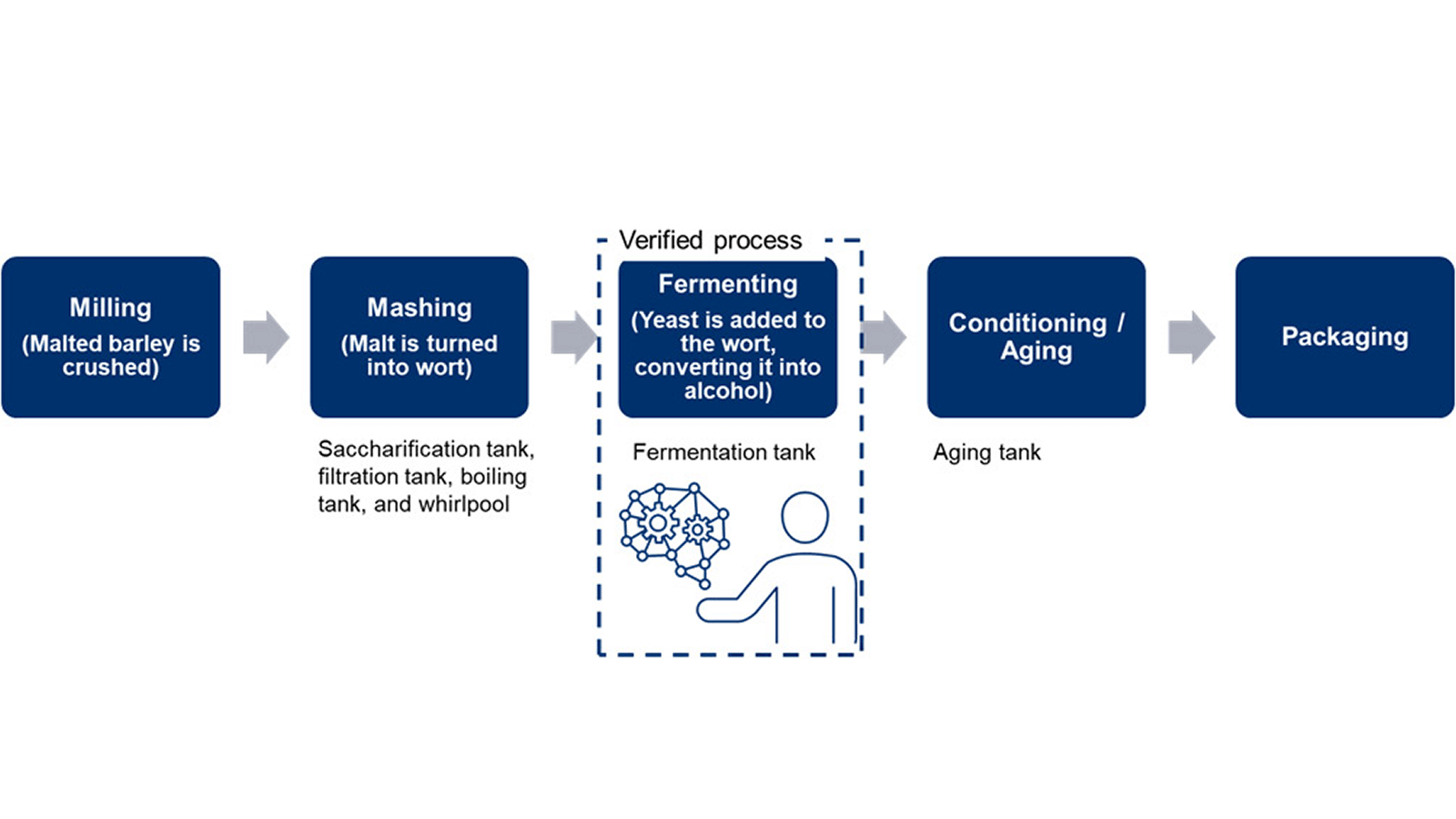
Meanwhile, Asahi Shuzo (known for the premium Dassai brand) collaborated with Fujitsu to develop a predictive AI model for brewing. By feeding decades of brewing data (like tank temperatures, rice polishing ratios, yeast inputs) into the model, the AI can suggest optimal adjustments during fermentation to hit desired flavor profiles. The goal is not to replace the brewmaster, but to provide a decision-support tool that can catch anomalies early or recommend subtle tweaks, thereby improving consistency. Asahi Shuzo’s trial was partly motivated by labor shortages and an aging workforce - capturing the master brewer’s intuition in an algorithm could help preserve knowledge and maintain quality as experienced brewers retire.
Digital Tools for Quality Control and Knowledge Transfer
Companies like NEC have introduced digital cloud services tailored for sake brewing (for instance, the “NEC Sake Brewery Cloud” platform). These systems digitize fermentation logs, monitor yeast activity, and visualize data for brewmasters. By analyzing big data from multiple batches, breweries can reduce batch-to-batch variability and ensure that their flagship products taste the same year after year. This is increasingly important as breweries scale up for exports - global consumers expect consistency.
Another fascinating use of AI is in image recognition: a renowned brewery, Nanbu Bijin, conducted experiments using AI-driven image analysis for the critical rice soaking step. Traditionally, deciding how long to soak rice (to achieve a target moisture level) is a highly skilled judgment by the tōji. Nanbu Bijin’s approach was to train a model on images of rice during soaking along with data like water temperature and rice type, to see if AI can learn to judge soak completion similarly to a human expert. Early results show AI can indeed correlate visual cues (rice grain expansion, color changes) with optimal timing, offering a future where an AI assistant can alert “drain the rice now” to replicate a master’s intuition. Furthermore, AI is being used to record and preserve traditional brewing knowledge. With fewer young Japanese entering the brewing trade, some breweries are literally training generative AI on the words and decisions of their veteran brewers, creating a knowledge base that can guide newcomers after the veterans retire. This helps tackle the demographic challenge by ensuring that experience isn’t lost - the AI can provide suggestions or reminders based on patterns it learned from the masters.
Automation and Robotics in Sake Breweries
While the romantic image of sake brewing is handcrafted all the way, the reality is many breweries have used mechanization for decades for labor-intensive steps like rice polishing, washing, and bottling. The 2020s have seen an uptick in more advanced automation. Robotic arms and conveyor systems are now common in modern breweries for tasks such as transferring steamed rice to fermentation tanks or palletizing bottled sake for shipment. What’s new is the integration of these machines with smart control systems - essentially the rise of “smart breweries.” For example, some breweries have implemented automated koji-making machines that regulate temperature and humidity with precision that a human could not, resulting in highly consistent koji (the mold-inoculated rice that saccharifies starch).
Automation is especially beneficial for export-focused producers who need scalability. As one report noted, automation is being applied to “non-core” stages like bottling and labeling to improve efficiency, while brewers still handle the critical elements of fermentation and blending. This balance ensures that tradition (like taste tuning) is respected, but throughput is improved. A notable development in 2023 was the opening of a large-scale sake brewery in New York by Dassai (Asahi Shuzo) which cost $80 million and heavily utilizes automation - designed to produce high volumes of premium sake with minimal variability. Such facilities showcase how the future of sake brewing can marry automation with artisanal intent: robots handle the heavy lifting, computers monitor the fermentation curves, and human experts set the recipes and make final sensory judgments.
AI Beyond Production - Marketing and Personalization
It’s also worth noting that AI integration isn’t just within the brewery. Sake companies are starting to use AI in consumer-facing ways. For example, some online retailers and apps have introduced AI-driven recommendation engines for sake. Services like “Yummy Sake” or “Sake Selector” allow users to input their taste preferences (or rate sakes they’ve tried) and then an AI suggests other sakes they might enjoy - much like how Netflix suggests shows or Spotify suggests songs. This helps new consumers navigate the often confusing landscape of sake types. In Japan, an AI chatbot might suggest a perfect sake based on tonight’s dinner menu. Another novel use: AI flavor analysis for pairings - one brewery in Fukushima (Suzuki Shuzoten) partnered with a tech firm to analyze local fish flavor compounds and then used AI to help formulate a sake that would pair optimally with those fish. The AI considered taste components like sweetness, umami, bitterness in both the fish and potential sake recipes to create a harmonious match. This kind of hyper-specific innovation not only results in interesting products (sake tailored to sashimi of a particular catch) but also generates local buzz and storytelling that can attract consumers.
Sustainability Initiatives
On the sustainability front, the sake industry is increasingly aware of environmental challenges and is taking steps to address them. A foremost concern is rice cultivation. Sake brewing requires special sakamai (sake rice) varieties that are resource-intensive to grow (they often need ample water and careful tending). Climate change has already caused some poor harvests in Japan - for instance, recent years saw heat waves and weather patterns causing lower rice yields and quality, dubbed in the media as a potential “Reiwa rice crisis”. In response, many breweries have started in-house or contract farming to ensure a stable, quality supply of rice. Breweries like Watanabe in Niigata have gone as far as establishing their own rice fields (112 fields in their case) to practice sustainable agriculture and control quality. By having their own farms or working closely with farmers, breweries can experiment with more climate-resilient rice strains and organic farming methods. Some are adopting old hardy strains or new hybrids that can better withstand heat and resist disease, thus ensuring future supply.
Water usage is another significant environmental issue. Sake is very water-intensive: beyond the water that actually goes into the brew, large volumes are used for washing rice, cooling, and cleaning. Recognizing this, some forward-thinking breweries have implemented water recycling systems and optimized washing processes. Studies indicate that optimizing brewing steps and upgrading equipment can reduce water consumption per liter of sake by up to 20%. For example, new rice washing machinery can use a recirculating system to reuse rinse water for the initial wash of the next batch. Brewers are also investing in energy-efficient equipment: modern koji rooms with better insulation (to reduce heating/cooling energy), solar panels on brewery rooftops, and more efficient boilers for steaming rice. A handful of breweries have even aimed for carbon neutrality by using biomass (rice husks or sake kasu lees) as part of their energy source.
Waste reduction ties into sustainability as well. Sake brewing produces by-products like sake kasu (the lees left after pressing). Rather than treating this as waste, many breweries are finding ways to repurpose or sell it - it can be used in cooking, as livestock feed, or even in cosmetics (for its kojic acid). This not only reduces waste but creates additional revenue streams and reduces the environmental footprint. Packaging is another focus: as exports grow, the industry is mindful of the weight and materials of bottles. Some exporters are switching to lightweight bottles and eco-friendly packaging to cut down on shipping emissions and glass usage. In Japan, there’s also talk of refillable sake stations or using more kegs for restaurants to reduce single-use bottles.
Lastly, localization of production is a sustainability strategy. The fact that sake breweries are popping up in the US, UK, etc., means that some share of consumption is met by local production, drastically cutting the carbon footprint of shipping heavy bottles across the world. This decentralization could be seen as a sustainability win (provided local breweries also source ingredients responsibly).
In summary, the production side of the sake industry in 2026 is a fascinating blend of old and new. Breweries still rely on the senses and skill of master brewers, but those brewers are now equipped with AI analytics dashboards. Wooden fermentation tanks might sit alongside stainless steel ones controlled by algorithms. Tradition is respected - for instance, breweries won’t ferment at unnatural speeds if it sacrifices taste - but they are open to any tech that can help maintain quality, reduce waste, and increase efficiency. This approach is crucial for their survival: it allows them to scale up for growing demand and cope with challenges like labor shortages. The integration of AI and sustainable practices also helps build a narrative for modern consumers who care about innovation and the environment. It’s not unheard of now for a sake bottle’s marketing to mention the brewery’s solar panels or AI-controlled cellar, which can actually enhance the product’s appeal by framing the producer as both authentic and cutting-edge. By and large, these innovations ensure that sake brewing can continue into the future with more consistency, responsibility, and resilience than before.
Trade and Educational Initiatives
The globalization of sake has not happened by accident - it’s the result of concerted trade initiatives and educational efforts by industry stakeholders and governments. As of 2026, there are numerous programs and strategies in place to promote sake internationally, educate both trade professionals and consumers, and facilitate the smooth export of sake worldwide. These initiatives play a pivotal role in expanding sake’s market reach and addressing the knowledge gap that once hindered sake’s acceptance abroad.
Government and Industry Promotion
The Japanese government, recognizing the export potential of sake, has actively supported the industry’s global outreach. Through the Cool Japan campaign and related efforts, sake has been positioned as a cultural ambassador product. The Japan Sake and Shochu Makers Association (JSS) in particular has been at the forefront. JSS regularly participates in major international trade fairs - for example, they have organized Japanese sake booths at Vinexpo Paris, ProWein (Germany), and other wine & spirits exhibitions where thousands of trade visitors can experience sake. These events allow importers, distributors, and sommeliers to taste a wide range of sakes and meet brewers, greatly improving the visibility of sake in the professional community. JSS has also led in-market seminars: in key cities around the world they host “Sake Introduction” seminars and tasting events for hospitality professionals. The Japanese government has provided subsidies for such promotions, acknowledging that sake exports not only help the economy but also serve as cultural diplomacy.
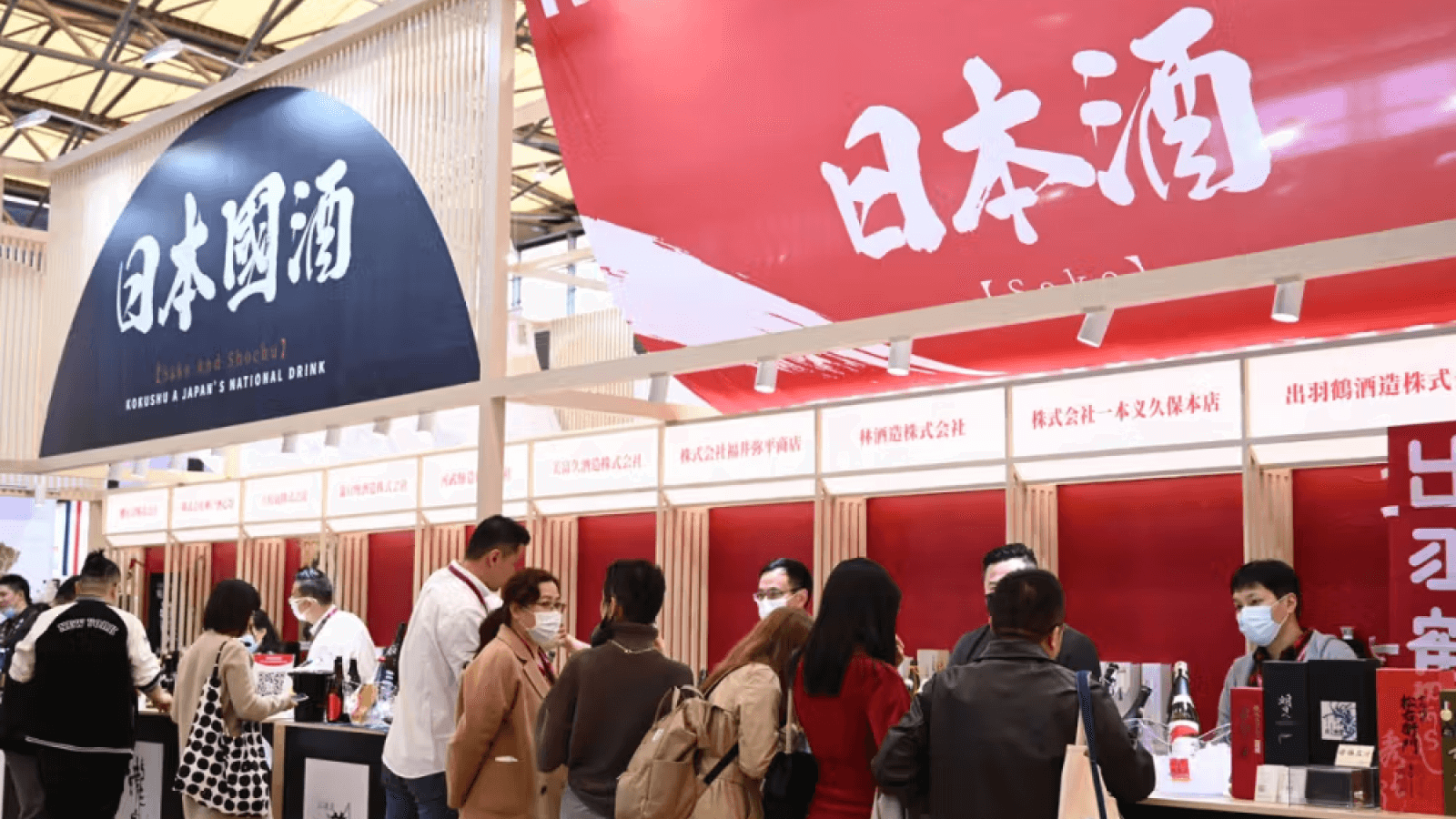
A milestone in promotion was the UNESCO Intangible Cultural Heritage listing of traditional sake brewing skills in 2024. This achievement was the result of a coordinated effort by Japan’s cultural authorities and sake industry advocates. The UNESCO recognition has been leveraged in marketing - being able to label sake brewing as a “heritage craft” adds prestige. Producers hope (and early signs indicate) that this will “boost global interest and reinvigorate enthusiasm for the beverage at home”. Already, UNESCO acknowledgment has garnered press coverage worldwide, effectively giving free publicity to sake. Japanese officials have remarked that such recognition helps justify more funding and programs to preserve sake brewing techniques and train new brewers. It’s a virtuous cycle: the more sake is recognized culturally, the easier it is to promote commercially.
Trade agreements have also played a role. The Economic Partnership Agreement between Japan and the European Union (effective 2019) removed tariffs on Japanese alcoholic beverages including sake, which was previously subject to import duties in Europe. This made Japanese sake up to 15% cheaper for European importers, spurring some increase in imports and allowing sake to be priced more competitively in stores. Similar efforts are being made to streamline export regulations - for instance, Japan has worked on harmonizing labeling standards so that sake bottles meet requirements in various countries (like ingredient listing, alcohol by volume, etc., in local languages). The smoother it is legally to import and sell sake, the more traders will take it on.
Sommelier and Professional Education
A major component of sake’s international success has been educating the educators - namely, sommeliers, bartenders, and beverage buyers who influence what end consumers drink. Organizations like the Wine & Spirit Education Trust (WSET) introduced certified sake courses (Level 1, 3 Awards in Sake) starting in the mid-2010s, and by now thousands of professionals around the world have received formal training in sake. This has created a cadre of sake sommeliers or sake specialists in markets like the US, UK, China, and Australia. These experts are crucial because they become ambassadors: a sommelier who understands and loves sake is likely to include it on a restaurant menu and confidently recommend it to diners.
The Japan Sake and Shochu Makers Association in 2022 forged a partnership with the Association de la Sommellerie Internationale (ASI), which is the global body of wine sommeliers. Through this partnership, sake was given a platform at sommelier events and competitions. For example, JSS sponsored sake workshops at the ASI Boot Camp in Malaysia and even integrated sake into the tasks at the ASI Best Sommelier of the World 2023 competition in Paris. By doing so, top sommeliers from dozens of countries were exposed to sake tasting and service at the highest level of their profession. The hope, as JSS stated, is that these influential sommeliers will spread their newfound appreciation of sake in their home countries, leading to wider adoption in gastronomy. In many ways, this strategy mimics what the wine industry has long done - invest in educator training, knowing that knowledgeable gatekeepers will drive consumer interest.
Consumer Education and Events
Reaching consumers directly is also vital. October 1st is officially Sake Day (Nihonshu no Hi) in Japan, and this has been used as a focal point for worldwide events. Sake Day events, often held in late September or early October in various cities, invite the public to taste many sakes in a festival atmosphere. Cities like New York, London, Sydney, and Hong Kong have hosted large sake tasting festivals drawing hundreds of attendees. These events demystify sake for consumers: they can try a diverse lineup side by side, learn from brewery representatives or sake educators at booths, and enjoy food pairings. Many are surprised to find sakes that suit their palate once they try a range (e.g., someone who thought all sake is strong might discover a lightly sparkling peachy sake they love).
Another innovative approach has been the Sake Future Summit, an online event that JSS initiated (one was held in late 2022). This was a virtual conference spanning different time zones with panel discussions, brewery video tours, and guided tastings (participants could pre-order tasting sets). The online format allowed thousands of enthusiasts globally to tune in and learn, reflecting how the sake community leveraged digital connectivity especially during the pandemic years to keep up momentum. Webinars, YouTube channels (like sake brewers doing live streams), and podcasts about sake have all proliferated, feeding an information-hungry audience.
Educational content is also coming from media and books. Since 2020, at least a dozen new English-language books on sake have been published, ranging from beginner guides to in-depth explorations of terroir and regional styles. Such literature and media coverage (e.g., articles in mainstream food/drink magazines about sake trends) reinforce the idea that sake is an important subject to know for any alcohol connoisseur. It’s increasingly common to see sake sections in general wine/spirit guides or to see sake reviewed with serious tasting notes and scores. This normalization in media helps the consumer see sake as just another category they might explore, rather than an obscure foreign product.
Trade Facilitation and Support for Brewers
On the supply side, Japanese authorities have eased certain regulations to help breweries export. For example, they expanded the types of containers sake can be exported in (allowing large totes, which can be bottled overseas, though this practice is still rare) and simplified export procedures for small breweries so they can participate in e-commerce or direct-to-consumer international sales in some cases. Also, a number of export consortiums or collective brands have formed where multiple small breweries jointly market under one banner abroad to share costs.
Japan External Trade Organization (JETRO) has organized buyer trips - bringing international importers to Japan to visit breweries and negotiate deals. Conversely, they facilitate Japanese brewers traveling to do roadshows abroad. COVID-19 briefly interrupted travel, but by 2023, brewers were again visiting cities like San Francisco or Singapore for promotional tours. Such face-to-face efforts build business relationships that ultimately increase sake availability in foreign markets.
Collaborative Educational Initiatives
We also see cross-industry collaborations. For instance, some Japanese breweries partner with foreign alcohol producers for hybrid events - a sake and wine comparative tasting, or a sake-beer collaboration brew (there have been beers brewed with sake yeast, marketed as East-West fusions). These collaborations spark interest among adjacent consumer groups (beer geeks might get curious about sake through a collaboration brew). Additionally, culinary schools have started to include sake in their curriculum. The Culinary Institute of America (CIA) partnered with Dassai’s new brewery in New York to offer a sake education module for chefs, the logic being that tomorrow’s chefs should know sake as well as they know wine or beer, in order to craft menus and beverage programs that include it.
In summary, the sake industry’s expansion is not a passive phenomenon; it’s being actively pushed by savvy trade and educational initiatives. By 2026, the fruits of these efforts are evident: more people around the world recognize daiginjo or understand what koji is, more restaurants have a little sake list, and more stores stock a few bottles. The combination of top-down initiatives (government, industry associations) and bottom-up passion (sommeliers, educators, brewers visiting consumers) has created a supportive ecosystem for sake’s growth. The continued success of sake will depend on maintaining this momentum - ensuring that new consumers get a proper introduction to the drink, and that any misconceptions are addressed by readily available good information and experiences. Fortunately, the community around sake seems dedicated; many enthusiasts often speak of almost a missionary zeal to “spread the gospel of sake.” With that kind of commitment paired with formal programs, the groundwork is laid for the sake market to keep blossoming globally.
Challenges and Market Hurdles
While the outlook for sake is optimistic in many respects, the industry faces a number of challenges and hurdles that could impede its growth if not addressed. These challenges span cultural, economic, and logistical domains, affecting both the production side and market side of the sake business. Below we outline the key issues and what they mean for the future of the sake market as of 2026:
Declining Domestic Consumption in Japan
Perhaps the most fundamental challenge is the continued decline of sake’s core traditional market - Japanese consumers. As noted, Japan’s domestic consumption has been on a downtrend for decades, and that trend persists. Younger Japanese people are drinking significantly less alcohol overall than previous generations (a societal shift so pronounced that Japan’s tax agency even launched a campaign in 2022 encouraging young adults to drink more to support tax revenues!). Within that shrinking alcohol consumption, sake often loses out to beer, shochu, chu-hi cocktails, wine, or non-alcoholic beverages which are perceived as more modern or easier to drink. Sake suffers somewhat from an image problem at home: it’s sometimes seen as old-fashioned or something one’s grandfather drinks. Despite efforts to rebrand sake for youth (e.g., trendy packaging, sparkling varieties), shifting a nationwide cultural consumption pattern is slow.
The direct impact of domestic decline is that many small breweries rely on local consumption, and if their communities aren’t buying sake, they struggle to survive. Over 100 breweries closed in the past decade, and more are at risk if local demand doesn’t stabilize. Consolidation helps some (larger companies buying out smaller ones), but that can lead to loss of unique regional brands. Culturally, there’s also concern: if Japanese people stop appreciating sake, a rich element of food culture could wane. Breweries are trying to counteract this with the premiumization and innovation trends we discussed, but it remains a core hurdle: how to make sake “cool” or at least relevant again to the average Japanese 20- or 30-something? The UNESCO listing might help a bit, and ironically the global popularity of sake could rub off back home (pride in an internationally recognized product might rekindle domestic interest). Still, overcoming domestic decline is an uphill battle that will likely continue beyond 2026.
Aging Brewers and Rigid Regulations
Another internal challenge in Japan is the aging workforce of sake brewers and restrictive laws that hamper new entrants. The typical master brewer (tōji) is often in their 60s or older. Historically, brewing knowledge was passed down through apprenticeship, but fewer young people are joining the trade due to hard work conditions (brewing season is cold and labor-intensive) and less lucrative pay. Exacerbating this is a Japanese law that hasn’t issued a new brewery license in over 70 years. Essentially, to open a new sake brewery in Japan is nearly impossible unless you take over an existing license. The law originally aimed to prevent oversupply and protect tax revenue, but now it’s seen as stifling innovation and renewal in the industry. Ambitious would-be brewers sometimes have no choice but to start their projects abroad (which is why some Japanese brewers moved to the US to open breweries, as mentioned).
The lack of fresh blood in Japan’s brewery scene is a worry - it means fewer innovative ideas domestically and potential loss of brewing techniques if no one continues them. Efforts are underway to loosen these regulations; even some government voices acknowledge that, to rejuvenate the industry, they may need to allow new microbreweries or startups in sake. Until that happens, Japan risks a slow attrition of breweries. In 2026, there is hope that policy might change (perhaps spurred by the UNESCO cultural recognition, authorities could justify exceptions for preserving craft), but as of now this remains a significant hurdle.
Raw Material Challenges - Rice and Climate
Sake’s key ingredient, rice, poses its own challenges. Quality sake rice (like Yamada Nishiki, Gohyakumangoku, Omachi, etc.) is not only expensive but also subject to the whims of agriculture. Climate change has already impacted some harvests; as cited earlier, unusually warm or unstable weather can reduce rice quality (e.g., causing cracks in the grain or lower starch content). A poor rice harvest directly hurts sake production capabilities and can drive prices up. Breweries have reported paying more for rice year over year, squeezing their margins especially on cheaper sakes where profit is thin. Additionally, the cultivation of sake rice is labor-intensive and fewer farmers specialize in it now (as farming too faces an aging labor force in Japan). Breweries creating their own farming operations helps but not every brewery can afford to do that. They must also compete with table rice demands; if a rice isn’t selling for sake, farmers might plant something else for general consumption or feed.
In short, ensuring a stable, affordable supply of high-quality rice in the face of environmental and demographic pressures is a constant concern. Some breweries are exploring new varieties that could grow in different climates - even experimenting with rice cultivation abroad (for instance, California grows Calrose rice used by some US sake breweries, and a few Japanese brewers have trial projects with rice farming in Southeast Asia). However, transitioning to new varieties or locations is complex due to terroir differences.
Competition from Other Beverages
In global markets, sake faces stiff competition for consumer attention. The craft beverage revolution means consumers have many choices - craft beers, small-batch gins, natural wines, Korean soju, you name it. Sake is carving its niche, but it competes for shelf space and menu space. For example, a trendy bar might consider offering a sake cocktail, but that slot could just as easily go to an in-vogue mezcal cocktail or a local craft beer tap if sake isn’t actively pushed. Wine remains a huge competitor in the food pairing space; while sake pairs brilliantly with a range of foods, wine has a far more entrenched position in restaurants worldwide. Educating a sommelier to add sake is one thing, but getting a restaurant owner to replace a wine with sake on their limited menu is another - some hesitate fearing customers won’t order it.
The key competitive disadvantage sake has is lack of ubiquity: many consumers still haven’t tried it, whereas beer and wine are familiar. Overcoming that inertia is tough. Price is also a factor; a decent bottle of wine can be cheaper than a decent bottle of imported sake due to import costs and economies of scale in production. Consumers might opt for what they perceive as the safer, known choice (wine/beer) unless they have a reason to venture to sake. So, sake has to fight for each new consumer and often relies on the novelty or exotic appeal - which can be a double-edged sword, since being “exotic” also keeps it niche.
Logistics and Shelf Life
Sake, especially the premium or unpasteurized kind, can be fragile. It’s best consumed fresh (most sakes don’t benefit from long aging like wine) and can be sensitive to heat and light. This creates logistical challenges for exporting. Ideally, sake should be shipped and stored refrigerated, but that’s expensive. Many sakes travel in ambient containers, and while most hold up fine thanks to pasteurization, there can be quality degradation if they’re stored improperly (a bottle sitting on a warm store shelf for months might develop off flavors). Importers have to invest in cold chain infrastructure for the highest-end sakes, which not all are willing to do. This limits distribution for artisanal unpasteurized sakes that really shine but need careful handling.
Additionally, the shelf life of an opened bottle of sake is relatively short; once opened, a bottle can start losing aroma in a few days to a week. For bars or consumers used to wine, which can last a bit longer with preservation, this is a slight inconvenience. Restaurants have to ensure they can sell through an opened bottle quickly or use devices to keep it fresh. These practical considerations mean sake requires a bit more care and knowledge in the supply chain compared to spirits (which are very shelf-stable) or even wine. As the market grows, more players will figure this out, but it’s currently a hurdle especially in regions with underdeveloped distribution (some places might not import sake simply due to lack of proper storage facilities or the perceived hassle).
Consumer Knowledge Gaps and Misconceptions
Despite the education efforts, many potential consumers still lack basic knowledge about sake. Common misconceptions include: “All sake is super strong,” “Sake is a distilled spirit” (it’s not - it’s brewed), or “You must drink sake hot.” These misconceptions can turn people off before they even try sake. If someone had cheap hot sake once and disliked it, they may write off sake entirely, not realizing there’s a whole world of premium sake meant to be served chilled. Another issue is pronunciation and intimidation - some English-speaking consumers aren’t sure how to say the names or feel intimidated by Japanese terminology on labels, making them hesitant to buy. The lack of familiarity compared to say beer or wine is a psychological hurdle: people generally stick to what they know. Overcoming this requires constant education and approachable marketing. It’s improving year by year, especially among foodies and younger consumers who are adventurous, but the knowledge gap remains a hurdle to broader adoption.
Economic and Currency Factors
The business of exporting sake is also subject to macroeconomic factors. Currency fluctuations can significantly affect profitability. The Japanese yen’s weakness in recent years has ironically been a boon for exporters (sake became cheaper for foreign buyers), but currency trends can reverse. If the yen strengthens, Japanese sake will become more expensive overseas, potentially dampening sales or squeezing importer margins. Additionally, inflation and global economic conditions play a role. Sake is often seen as a discretionary luxury purchase. If economies slow down or enter recession, people might cut back on buying imported drinks or dining out, which could hit sake demand. Breweries also face cost inflation - rising costs of materials (bottles, shipping, rice, energy). Many breweries operate on thin margins, especially when competing abroad with other bev categories, so if costs spike, they either have to raise prices (risking sales) or absorb it (hitting their financial viability).
Market Saturation and Differentiation
In Japan, one could argue there is an oversupply of sake relative to dwindling demand, which results in intense competition among breweries. Even globally, as more producers enter (including non-Japanese producers), the market could become crowded in certain segments. Brands need to differentiate - but there’s a risk of too many similar products confusing consumers. Unlike wine which has well-defined grape varietals and regions, sake differentiation is more nuanced and not immediately obvious to novices (two daiginjos from different breweries may not have clear distinguishing factors to a new consumer, for instance). The industry needs to avoid a scenario where it floods a nascent market with too many labels without guiding the consumer, which could lead to decision paralysis or random buying that might result in a bad first experience if they pick an unsuitable bottle.
Regulations in Import Markets
While Japan has its side of regulations, import markets also have theirs. Some countries classify sake variously as wine, beer, or spirit for tax and licensing purposes - this affects how it can be sold. In the U.S., for example, some states consider sake as “wine” (since it’s fermented) which allows it to be sold in wine shops, but others might categorize stronger sakes as spirits due to ABV, which could restrict sales to liquor stores only. These inconsistent rules can complicate nationwide distribution strategies. Additionally, labeling requirements (allergen warnings, etc.) vary by country, and keeping compliant is a task especially for small brewers. Customs issues or tariffs (in countries without trade deals) can also pose barriers. While these are surmountable, they do add friction.
In light of these challenges, the industry is actively seeking solutions: from modernizing marketing to lobbying for regulatory changes, and from diversifying product lines (like low-alcohol or flavored sakes for the domestic youth) to leveraging technology for cost savings. The challenges certainly temper the growth prospects - it’s unlikely sake will ever rival beer or wine in sheer volume - but by acknowledging and working on these hurdles, stakeholders aim to sustain the growth that has been achieved. The strategic outlook will depend on how well these challenges are managed. If domestic consumption finds a floor and export markets keep expanding while navigating the issues above, sake can enjoy a bright future. If not, we might see a plateau or consolidation phase where only the strongest brands thrive. The next section will outline that strategic outlook in more detail.
Strategic Outlook for 2026 and Beyond
Looking ahead, the strategic outlook for the sake market through 2026 and beyond can be described as cautiously optimistic with a strong innovative drive. The industry is in a transformative period where it is balancing tradition with modernity, and domestic roots with international branches. Based on current trends and challenges discussed, here are the key elements of the strategic outlook:
Moderate but Steady Global Growth
Industry forecasts and expert analyses suggest that the global sake market will continue to grow at a moderate pace in the coming years - likely in the 4-5% CAGR range in value. This growth will be propelled primarily by international markets. By 2026, we expect global sake consumption value to be higher than today, though volume growth will be modest due to Japan’s decline (meaning average price per unit sold rises). In essence, sake is carving out a solid, if small, place in the global beverage portfolio. It won’t explode in exponential growth like some trendy spirits have, but its growth will be resilient and less fad-driven because it’s anchored in deep cultural significance and a unique flavor profile that doesn’t directly compete as a substitute for something else. Sake will increasingly be viewed alongside wine and craft spirits as a permanent category on store shelves and restaurant menus, especially in cosmopolitan cities. The strategic implication is that producers and distributors should plan for sustainable growth: investing in brand building and distribution with a long-term mindset rather than expecting a quick boom.
Greater Internationalization and Localization
By 2026, we anticipate more integration of sake into local markets worldwide. This means not just exporting Japanese-made sake, but also the rise of local sake production and localized sake culture. For example, the U.S. already has over two dozen sake breweries; that number could grow, and we may see new countries joining the brewing club (perhaps a brewery in Latin America or more in Europe/Australia). Japanese brewers may continue to invest abroad, like Dassai did in New York, as part of a strategy to capture overseas markets by producing nearer to them. This helps circumvent some logistical issues and import costs.
At the same time, Japanese breweries will likely form more collaborations with foreign entities - such as co-branding with Western celebrities or partnering with foreign alcohol producers for cross-over products - as a way to localize and appeal to those markets. The concept of terroir might emerge in sake outside Japan: local water and local rice (even if not traditional sake rice) could give rise to distinct regional sake styles abroad, enriching the category. Strategically, the Japanese industry may embrace an export of know-how (selling technology, yeast, and guidance) in addition to product, fostering a larger global ecosystem for sake. This doesn’t undermine Japanese exports; rather it amplifies awareness and can lead to more interest in the original Japanese products too.
Focus on Education and Cultural Branding
Education will remain at the heart of sake’s strategy. By 2026, we expect the certification programs and sommelier training to have expanded even more. Perhaps there will be an internationally recognized title like “Master of Sake” akin to Master Sommelier - some moves in that direction are already visible with the Sake Samurai title (an honorary title given by JSS to notable promoters) and other certifications. The cultural narrative of sake will be a key selling point: sake will be marketed not only as a drink, but as an experience and a connection to Japanese culture and craftsmanship. Storytelling in marketing will highlight elements like family breweries, the lore of the tōji guilds, or the pristine mountain water used in brewing. This aligns with consumer desires for authenticity and story, and it differentiates sake from other beverages. We also foresee sake tourism becoming a niche but interesting segment - more foreign tourists visiting Japan (when travel fully normalizes) are keen to include brewery visits and sake tastings in their itinerary, similar to wine tourism. Breweries are preparing for this by creating visitor centers or partnering with tour agencies. This can create more global ambassadors organically.

Product Innovation Continues
Strategically, breweries will continue innovating to broaden sake’s appeal. We will likely see more ready-to-drink (RTD) sake-based beverages, such as canned sake cocktails or flavored sake drinks, targeting younger demographics. Already, large companies have experimented with things like plum-flavored sake or low-alcohol sparkling jelly sakes in cans. These can serve as entry products: someone might first try a yuzu-infused sake cocktail in a can and then become curious about real junmai ginjo. The balance for brewers is to do this without diluting the prestige of premium sake - typically the large corporate brewers handle the RTD side under separate brands, leaving their main brands for traditional products.
Also, new brewing techniques or styles will emerge: e.g., perhaps more widespread production of koshu (aged sake) - which is currently a tiny niche - as breweries realize there’s a whiskey and wine-loving audience that might appreciate a long-aged, complex sake as a sipping drink. The diversification of polishing ratios mentioned in the IWC article (some going ultra-low, some hardly polishing at all) will likely result in truly novel flavor profiles, giving aficionados new things to explore. This innovation is important to keep the category dynamic and newsworthy.
Emphasis on Sustainability and Ethical Practices
As sustainability has become a key concern globally, sake breweries that champion eco-friendly practices may gain a competitive edge, especially with younger consumers. By 2026, we expect to see more breweries boasting about being carbon-neutral or using organic rice or supporting local farmers. This will be part of the strategic marketing - tying into the authenticity narrative but adding a modern ethical dimension. Some might even pursue certifications like organic, though organic sake is challenging due to strict brewing needs and limited organic rice supply. Nonetheless, even small steps (like local sourcing or energy efficiency) will be highlighted. We may also see collaborative industry initiatives for sustainability, such as a sake industry pledge to reduce water usage or a recycling program for bottles in Japan.
Navigating Challenges - Adaptation
On the strategic front, there will also be a focus on mitigating the challenges we discussed. For the domestic slump, one strategy is diversification: many sake breweries in Japan are branching out into other products like gin, liqueurs, or collaborating to produce beer, essentially not putting all eggs in the sake basket for revenue. Some are leaning into exports wholeheartedly - producing more sake types that foreign markets demand (for instance, fruit-forward sakes or those that pair with non-Japanese food). If regulations remain strict on new entrants, incumbents might seek to form subsidiaries or new brands abroad to try experiments they can’t at home. To tackle raw material issues, more partnerships with agriculture tech might arise (imagine “smart farming” for sake rice using IoT sensors to maximize yield, or labs developing yeast that can work with slightly lower quality rice but still produce great aroma). The point is, the industry is aware of the challenges and is actively strategizing to adapt.
Market Structure and Players
We might see some shifts in the competitive landscape by 2026. Large beverage conglomerates (both Japanese and international) could increase their involvement. For example, Japanese beer companies that own sake brands may invest more in those as beer consumption plateaus. International drinks companies might acquire stakes in sake breweries or importers if they see continued growth (we’ve seen something similar with Japanese whisky where foreign spirits companies acquired Japanese distilleries). While sake will largely remain a story of many small producers, having some big players with deep pockets pushing sake globally could accelerate infrastructure development (distribution channels, marketing campaigns). At the same time, craft and indie ethos will remain strong - in fact, being small and artisanal is a selling point for many sake brands, so we expect the craft identity to remain even if behind the scenes there’s more investment money.
Cultural Integration and Acceptance
Strategically, one of the biggest signs of success beyond 2026 would be sake becoming a normalized part of global drinking culture. The industry will want to see, for instance, not just Japanese restaurants carrying sake, but French bistros, American steak houses, and Chinese fusion restaurants offering a sake option. Or sake being available by the glass at cocktail bars and music lounges. In Japan, success might be a younger generation that includes sake in their drinking repertoire (maybe via new formats like highball-style mixed sake drinks). The more integrated sake becomes, the less it’s at risk of being a passing trend. By 2026, it’s reasonable to predict that sake will indeed be more mainstream than it is today, though still exotic to some. Consumer surveys might show increased awareness - for example, a higher percentage of wine drinkers acknowledging they occasionally drink sake as well.
In conclusion of the outlook: the sake market of the late 2020s is poised to be larger, more international, and more innovative, yet also faces the task of preserving its heritage and navigating structural challenges. Trust, authenticity, and experience will be key for industry players. Those breweries and brands that can demonstrate real craftsmanship (expertise), have a story (experience) and credibility (authoritativeness, like awards or cultural recognition), and build trust with consumers (consistent quality and messaging) are likely to thrive. The others may fall behind or consolidate.
Ultimately, sake’s future looks bright if somewhat complex: it is neither destined to explode into a mass-market beverage nor to retreat into obscurity. Instead, it’s on a path to become a lasting, cherished segment of the global drinks market - much like how single malt Scotch or champagne occupy their own respected niches. In that sense, 2026 might be seen as the era where sake completed its transition from a local tradition to a global trend, setting the stage for a sustainable presence worldwide.
Conclusion
The sake market in 2026 is a study in contrasts and convergence. An ancient drink born from Japanese tradition is now a dynamic global player in the beverage industry. We have seen how global market size is growing steadily, fueled by newfound international enthusiasm even as challenges at home in Japan temper total volume gains. Region by region, sake’s story unfolds differently - booming exports to China and the U.S., steady inroads in Europe, and innovation-driven resilience in Japan and Asia. Consumers are discovering that sake is far more versatile and intriguing than they may have imagined: it can be crisp and fruity, or rich and umami-laden; it can sparkle like champagne or present the cloudy heft of a farmhouse ale; it can accompany sushi, steak, or stand alone as a meditative sip. Changing perceptions and preferences reflect this newfound appreciation, as evidenced by trends toward premiumization, lower-alcohol varieties, and novel styles like sparkling sake.
On the production front, sake brewers are proving that innovation and tradition can go hand in hand. The integration of AI and precision technology in brewing is helping maintain consistency and push quality to new heights, ensuring that the mystique of the master brewer’s craft can be translated to larger scales without loss of integrity. Simultaneously, a reverence for sustainability is guiding brewers to safeguard the resources - water, rice, land - that have sustained sake for centuries. These efforts not only address modern ethical consumer expectations but also secure the future of the industry against environmental uncertainties.
Trade and educational initiatives are effectively building bridges between sake and the world. From government-backed promotional events in cosmopolitan centers to grassroots sommelier training and online summits, sake has never been more accessible or visible outside Japan. UNESCO’s recognition in 2024 of sake brewing as a cultural treasure is emblematic of sake’s dual identity - it is heritage, and it is contemporary global trend. The industry’s strategic outlook, therefore, hinges on nurturing this identity: preserving the deep cultural roots that give sake its soul, while embracing the change and creativity that propel its market growth.
Challenges certainly remain, from demographic shifts and regulatory quirks in Japan to competitive pressures and knowledge gaps abroad. Yet, the trajectory through 2026 suggests that sake is meeting these hurdles with characteristic resilience and ingenuity. Brewers large and small are adapting - by diversifying product lines, engaging new audiences, and sometimes even reimagining laws and business models - all to ensure that sake continues to thrive.
The forecast for the sake market is one of sustainable growth and enriching evolution. We can expect that by the end of 2026 and beyond, sake will be even more firmly established on the world stage: a beverage that aficionados revere, new consumers find approachable and exciting, and producers both in Japan and internationally are proud to craft. Sake’s journey from ancient brew to modern global darling is well underway, and if current trends hold, its renaissance is just beginning. For anyone interested in beverages - whether industry professional or casual enthusiast - the sake market is certainly worth watching (and tasting) in the years to come. Kampai!
.svg)


%20(1).png)
.webp)
.png)
